
Optimizing for a
New Audience
User research & strategy
Information architecture
Wireframes & Prototyping

[Mental image of a member retreat | Credit: Unsplash]
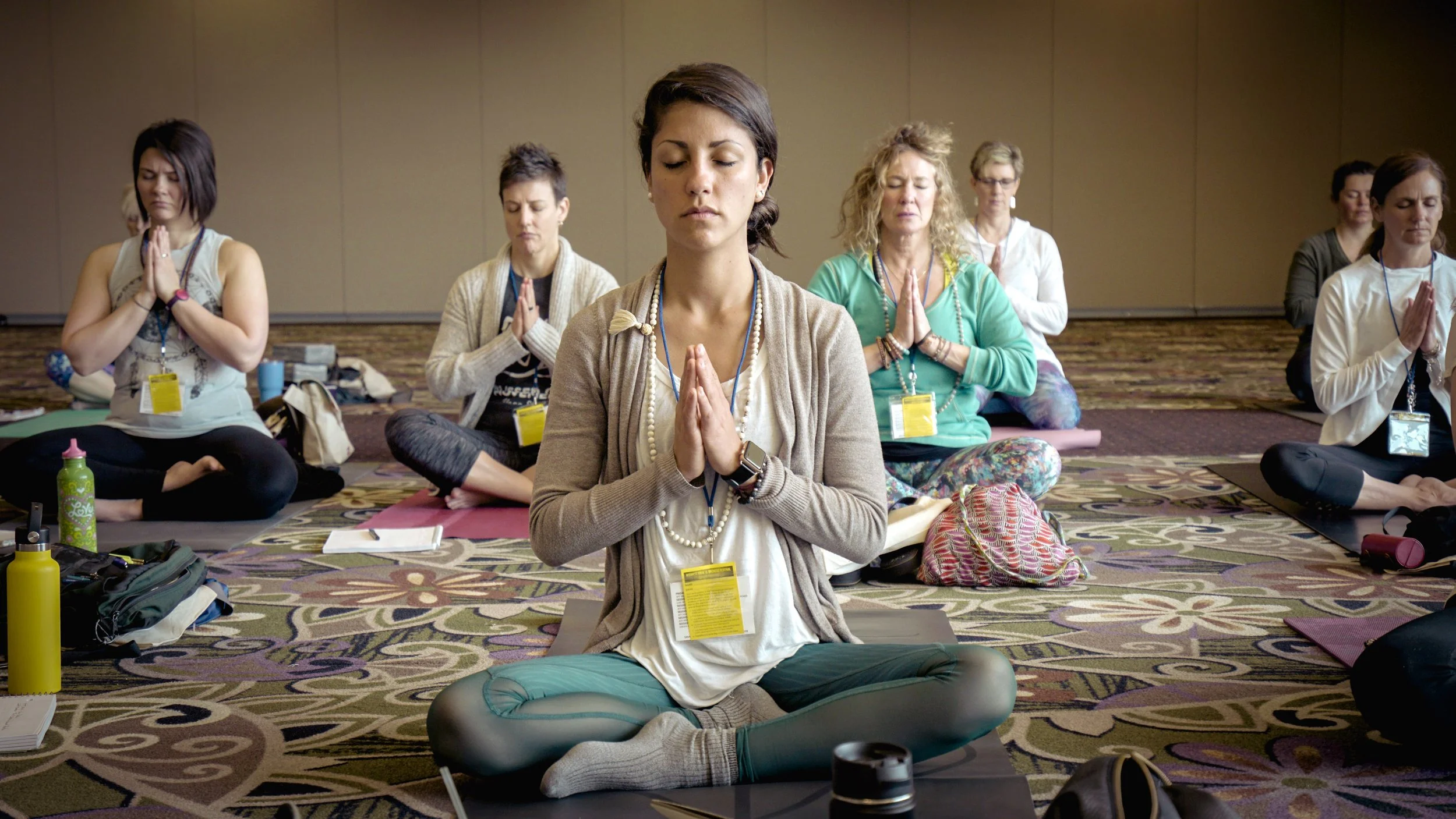
[Mental image of member workshop | Credit: Unsplash]
Overview
The Movement of Spiritual Inner Awareness (MSIA) is an organization that offers educational courses and events in spirituality both online and in-person. They have a small international following with a core group of their students living in the US. The organization sought to update their existing site to accommodate mobile viewing in order to reach a broader audience.
My Role
I was the UX designer on a team with a Creative Director and Visual Designer who designed the initial UI. We designed this site over the course of six months through bi-monthly meetings with stakeholders from the organization.
I was responsible for all of the user research, interviews and testing, and the creation of wireframes and a clickable prototype. I also worked closely with two developers for another eight months to implement the site, including QA testing and ticketing issues in JIRA.
After the launch of the site, I contributed to additional UI updates across the site.
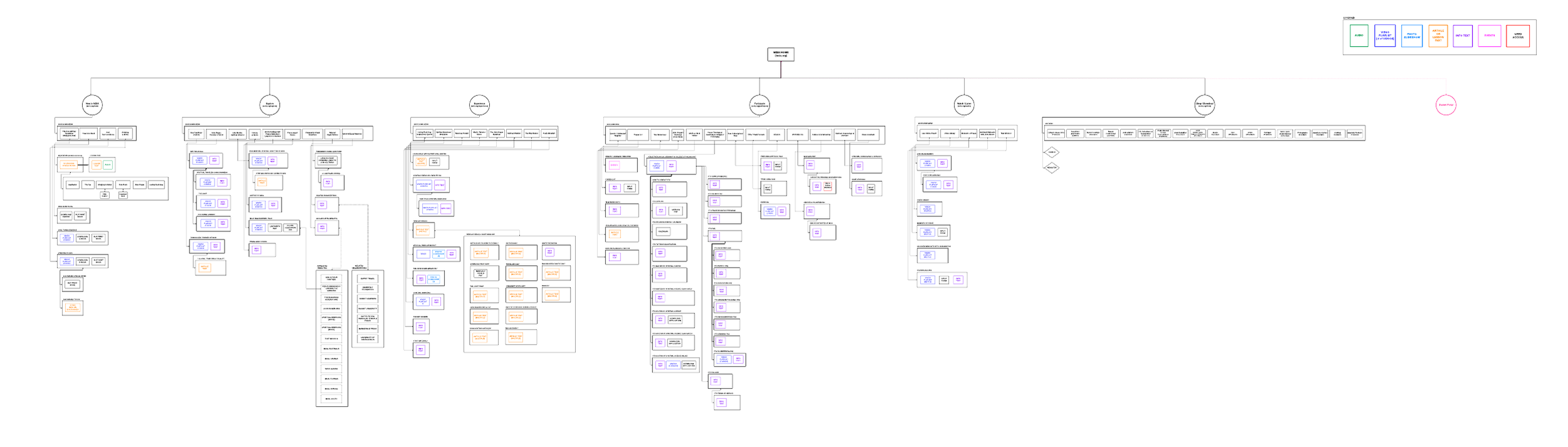
[Site map of the existing site with six options in the main navigation menu]
Process
We began our process with a content audit of the site and created a site map to identify and prioritize 11 key sections based on the significance of their use cases and stakeholder input. This formed the basis for our main menu which we explored through user journeys for each of our three user groups. We iterated on possible menus with card sorts with both students and new visitors.
Our final iteration consisted of four main options and was based on the journey of a user who progressed from new visitor to contributing student: Discover, Experience, Watch / Listen, and Give. A secondary menu included other necessary options including user login and a link to their store.
After agreeing on a main navigation menu, we shifted our focus to the key sections of the site and grouped them into user flows based on the user journeys of a new visitor and student.
In thinking through the user flows of a new visitor, we considered multiple possible landing pages. In addition to the homepage, we wanted to give students the option to share upcoming events, a sign up for a monthly subscription course, and a welcome page that linked to the previously mentioned pages and general information about the organization.
When considering the user journey of students, we focused on optimizing existing flows and pages.
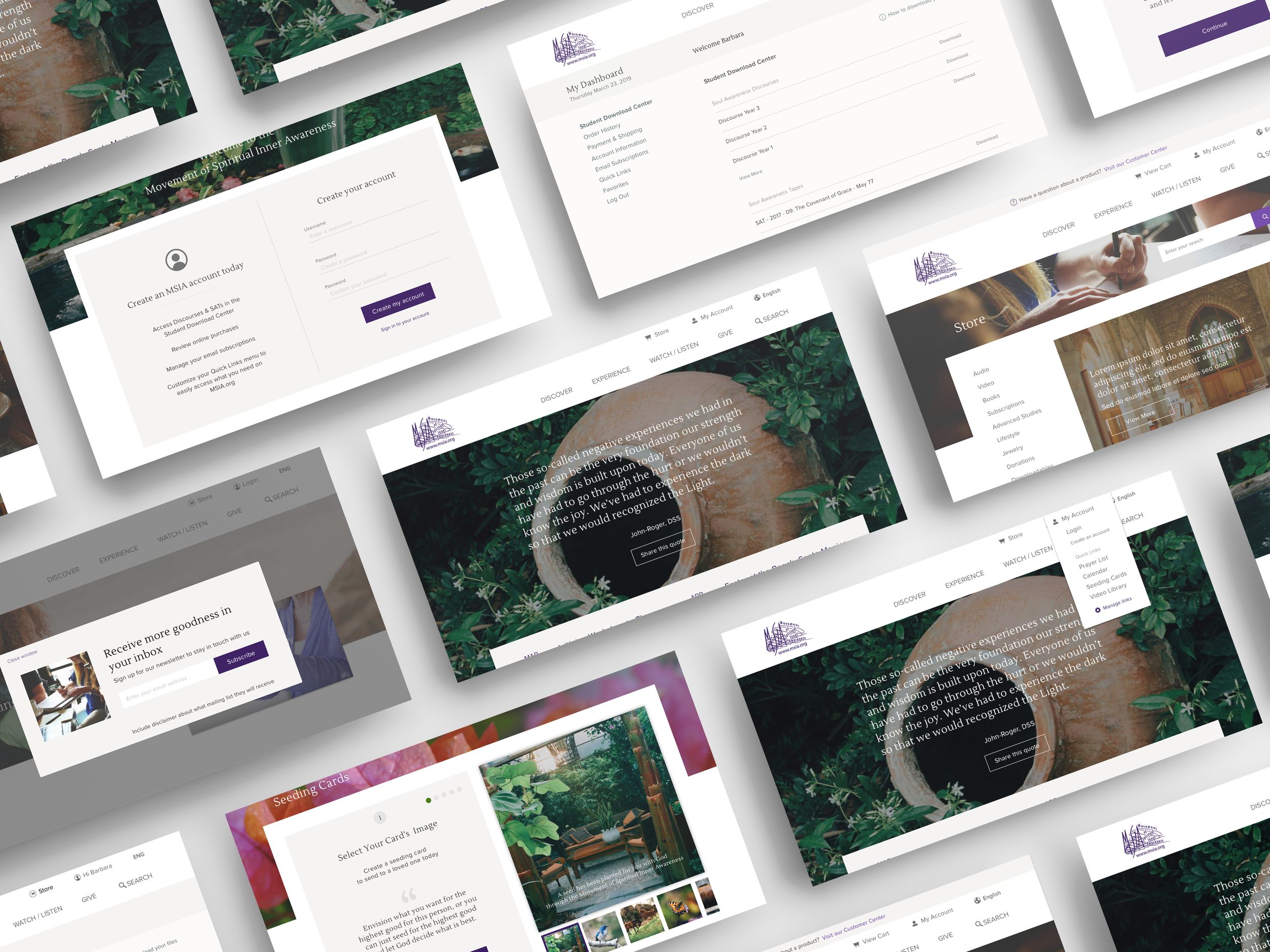
[A selection of screens from our redesign]
Research & Insights
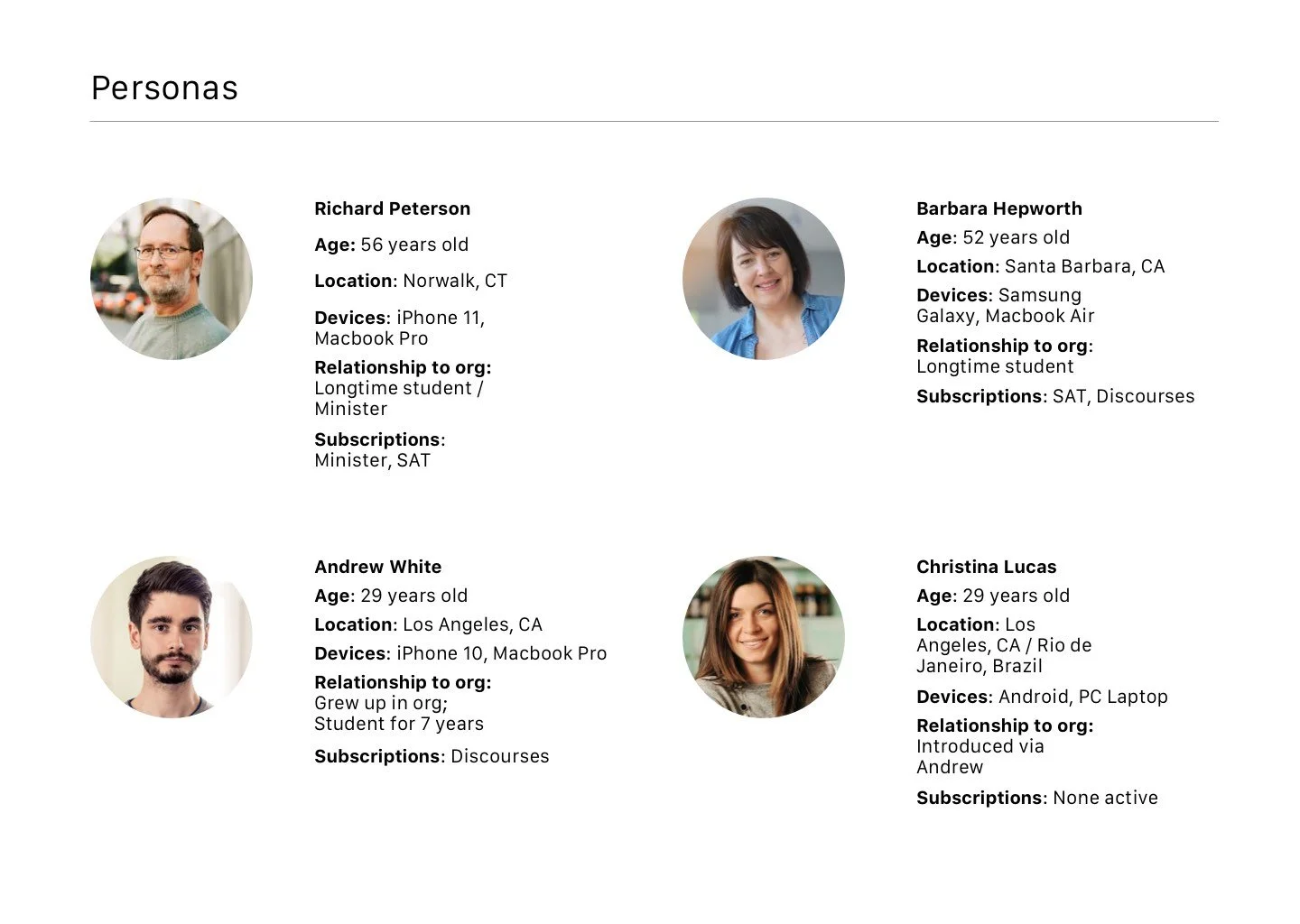
[Personas used in our redesign]
We conducted both in-person and remote interviews with fifteen students from the organization to learn about what they valued about MSIA and how they interacted with the organization as a whole.
From this we defined three user groups:
Longtime students, while aware of the site’s shortcomings, were more reluctant to see a significant redesign
Younger students, who were more conscientious of how they shared the organization, were eager to see it presented in a new light
New visitors who were discovering MSIA for the first time
From our research, we also gleaned three key insights that informed our strategy:
The personal nature of the organization's teachings
New visitors to the site were typically referred by word of mouth
The importance of connecting to users on an emotional level
Our goal was to redesign the website as a digital resource for students to share with others by streamlining access to relevant information via landing pages that featured the organization’s offerings-- their monthly subscription, and classes and workshops.
This informed the requirements for the site:
update UI and streamline access to organization's key offerings
include legacy content loved by longtime students
most users access the site with Apple devices and Chrome browser
Outcome
For this project we focused on qualitative feedback from stakeholders and students to determine our success. The positive feedback we received led to our next project of building a mobile app for the organization’s monthly subscription.
View the full project
To see more, you can download this PDF summary.
View Next Project
Subscription Based Mobile App
Creating a mobile app for free and subscription based content